




Product Description
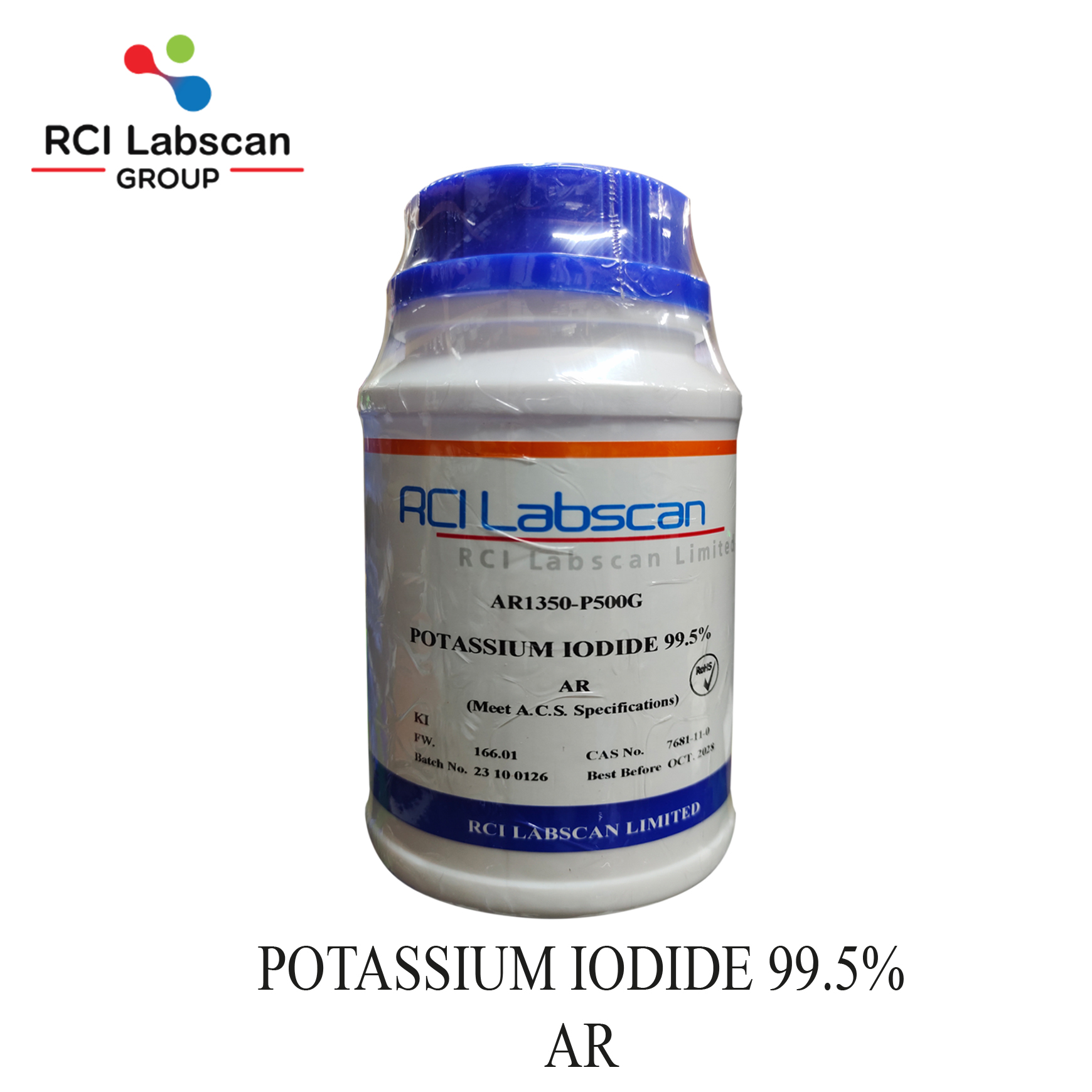
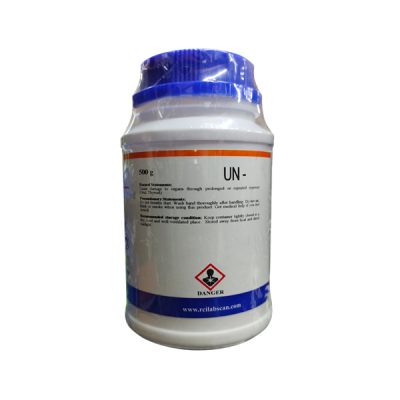
Potassium Iodide
Code: AR1350-P500G
Brand: RCI Labscan
Origin: Thailand
Formula: KI
Cas: 7681-11-0
Pack Size: 500gm
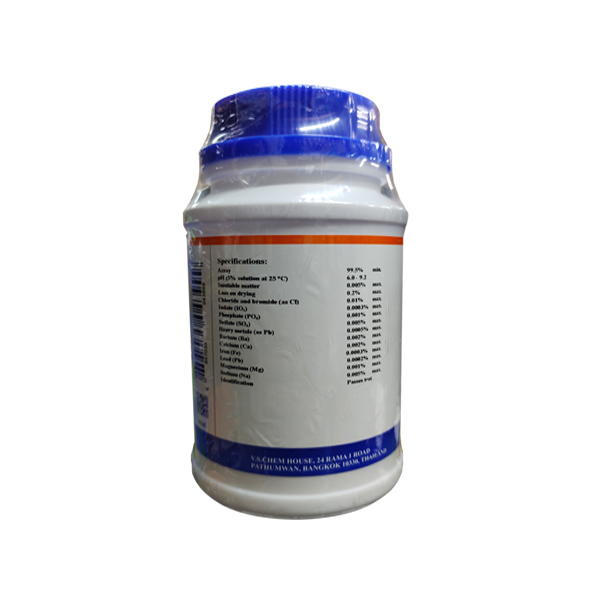
Specifications
Assay…………………………99.5%
Identification…………………Passes test
pH (5% solution at 25 ℃)………..6.0 – 9.2
Insoluble matter………………..0.005%
Loss on drying………………….0.2%
Chloride and bromide (as CI)……..0.01%
lodate (IO3)……………………0.0003%
Phosphate (PO4)…………………0.001%
Sulfate (SO4)…………………..0.005%
Heavy metals (as Pb)…………….0.0005%
Barium (Ba)…………………….0.002%
Calcium (Ca)……………………0.002%
Iron (Fe)………………………0.0003%
Lead (Pb)………………………0.0002%
Magnesium (Mg)………………….0.001%
Sodium (Na)…………………….0.005%
SAFETY DATA SHEET
SECTION 1: Identification of the substance/mixture and of the company/undertaking 1.1 Product identifier Product name POTASSIUM IODIDE 99.5 % CAS-No. 7681-11-0 Product code AR1350 1.2 Relevant identified uses of the substance or mixture and uses advised against Identified uses Chemical for analysis and production. 1.3 Details of the manufacturer of the safety data sheet Manufacturer RCI LABSCAN LIMITED. 24 Rama 1 Road, Pathumwan, Bangkok 10330 Thailand Telephone number (662) 613-7911-4 Fax number (662) 613-7915 1.4 Emergency Telephone Number Emergency phone (662) 613-7911-4 Potassium iodide (KI) is a chemical compound used primarily to protect the thyroid gland from damage caused by radioactive iodine during a nuclear emergency. In addition to its use as a radioprotective agent, it is also a medication and dietary supplement.
Uses: Nuclear emergencies: How it works: In the event of a nuclear accident, radioactive iodine may be released into the environment. The thyroid gland cannot differentiate between stable (non-radioactive) and radioactive iodine and will absorb any iodine present in the bloodstream. By taking potassium iodide, the thyroid gland is filled with stable iodine, preventing it from absorbing the harmful radioactive iodine. The radioactive iodine is then harmlessly flushed from the body.
Important notes: KI is not a general anti-radiation drug; it only protects the thyroid from radioactive iodine and not from other radioactive substances. It should only be taken when instructed by public health or emergency officials. For maximum effectiveness, KI must be taken shortly before or within a few hours of exposure. Medical treatment: Hyperthyroidism: KI is used to treat severe hyperthyroidism, also known as thyrotoxicosis or thyroid storm, as it can block the release ofthyroid hormones within hours. Thyroid surgery: It is used in the preoperative preparation for a thyroidectomy (surgical removal of the thyroid) for Graves’ disease, as it reduces the gland’s vascularity and decreases the risk of bleeding. Skin infections: Medically, KI has been used to treat certain skin conditions, such as sporotrichosis and erythema nodosum
Dietary supplement: Iodized salt: Potassium iodide is the most common additive used for iodizing table salt, a public health measure to prevent iodine deficiency. Animal feed: It is also used as a nutritional supplement in animal feeds.
Side effects: While the risk of side effects is low for most people with normal thyroid function, it increases with age and with prolonged or higher-than-recommended doses. Common side effects: Nausea, vomiting, diarrhea, and stomach pain.Skin rashes. Swelling of the salivary glands. A metallic taste in the mouth. Headache. Serious side effects (require immediate medical attention): Hives and fever. Swelling of the face, tongue, or throat. Difficulty breathing or speaking. Irregular heartbeat or chest pain.
Who should avoid potassium iodide?
You should consult a doctor before taking potassium iodide if you have: A known sensitivity or allergy to iodine. Pre-existing thyroid disorders such as Graves’ disease or Hashimoto’s thyroiditis. Kidney disease. Certain heart conditions combined with thyroid nodules. Certain other health conditions like tuberculosis or acute bronchitis. Infants, pregnant women, and breastfeeding women have specific dosage considerations in an emergency and should be monitored by a doctor. Adults over 40 have a lower risk of thyroid cancer from radioactive iodine exposure and a higher risk of adverse side effects from KI.
Industrial uses
KI is used with silver nitrate to make silver iodide (AgI), an important chemical in film photography. KI is a component in some disinfectants and hair treatment chemicals. KI is also







Reviews
There are no reviews yet.